
 Sobre
Sobre
 Termos
 Privacidade
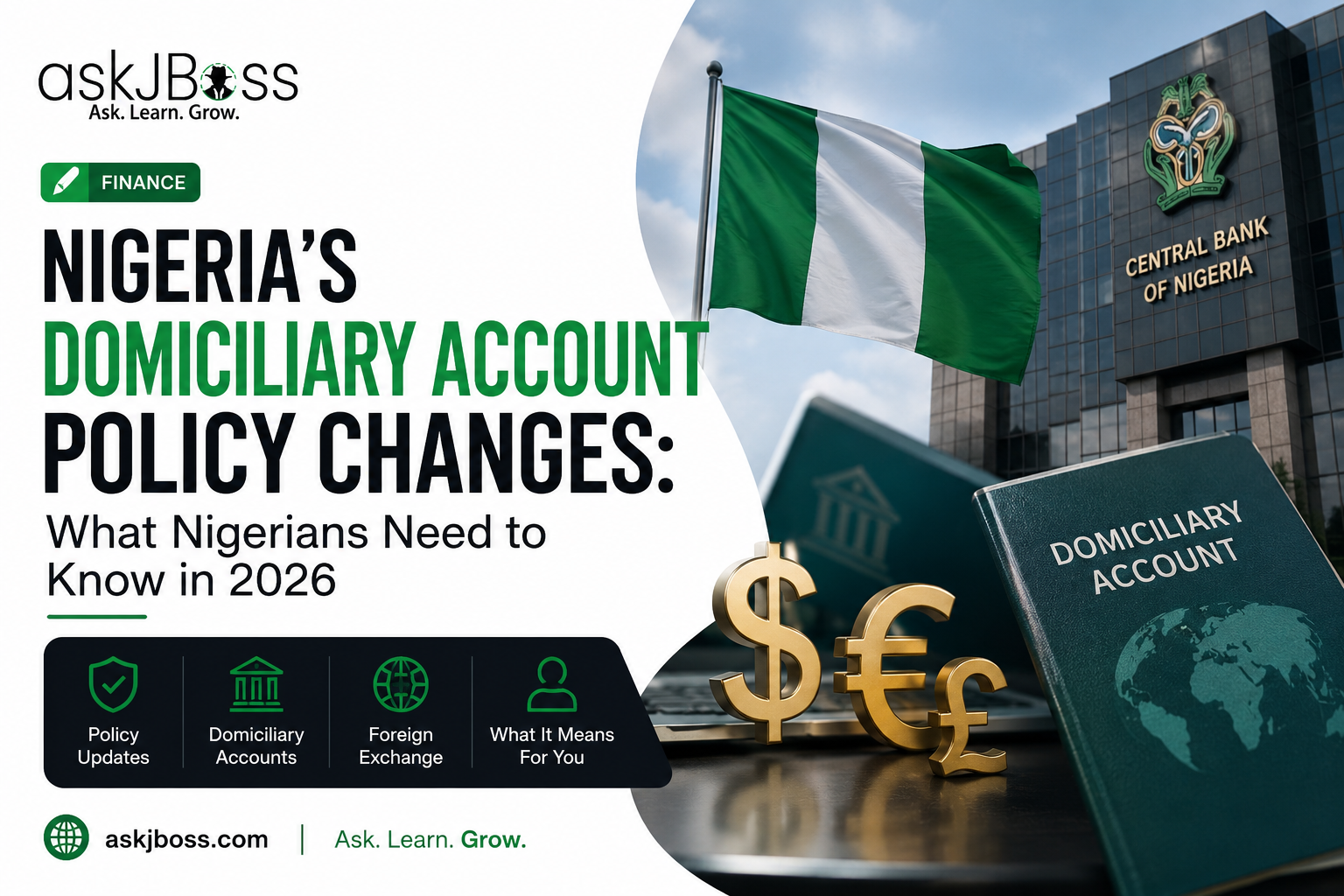
Nigeria's Domiciliary Account Policy Changes: What Nigerians Need to Know in 2026
Here's a professional blog post you can publish on AskJBoss.com.
Nigeria's Domiciliary Account Policy Changes: What Nigerians Need to Know in 2026
Nigeria's foreign exchange landscape continues to evolve, and domiciliary accounts remain one of the most important financial tools for individuals, businesses, freelancers, exporters, and Nigerians in the diaspora.
Recent updates from the Central Bank of Nigeria (CBN) have introduced significant changes aimed at improving transparency, boosting confidence in the foreign exchange market, and giving account holders greater control over their foreign currency funds. (Businessday NG)
What Is a Domiciliary Account?
A domiciliary account is a bank account that allows customers to hold and transact in foreign currencies such as:
-
US Dollars (USD)
-
British Pounds (GBP)
-
Euros (EUR)
These accounts are commonly used for:
-
International payments
-
Freelance earnings
-
Export proceeds
-
Diaspora remittances
-
Foreign investments
-
Overseas tuition and medical payments
Key Policy Changes
1. Unrestricted Access to Foreign Currency Funds
One of the most notable developments is the CBN's reaffirmation that ordinary domiciliary account holders have unrestricted access to funds held in their accounts. This means customers can access and utilize their legitimately sourced foreign currency balances without unnecessary restrictions. (Businessday NG)
2. Improved Confidence for Diaspora Remittances
The updated framework is expected to encourage more Nigerians abroad to send funds through official banking channels. Greater confidence in access to foreign currency deposits may help increase remittance inflows into the country. (Businessday NG)
3. Stronger Documentation and Compliance Requirements
While access has become more flexible for personal account holders, banks are now expected to maintain stronger Know Your Customer (KYC), Anti-Money Laundering (AML), and transaction monitoring procedures. Customers may be asked to provide documentation supporting large transactions or transfers. (Businessday NG)
4. Increased Oversight of Export Proceeds
The revised foreign exchange framework introduces tighter monitoring of export earnings to ensure proper documentation and compliance with foreign exchange regulations. Exporters should pay close attention to reporting requirements and banking procedures. (Businessday NG)
What This Means for Freelancers and Remote Workers
Nigeria's growing freelance economy relies heavily on receiving foreign currency payments from international clients.
The policy changes may benefit:
-
Software developers
-
Content creators
-
Digital marketers
-
Virtual assistants
-
Designers
-
Consultants
Many freelancers continue to use domiciliary accounts as a reliable channel for receiving international wire transfers and payments from abroad. (Reddit)
Benefits of Having a Domiciliary Account
Protection Against Exchange Rate Volatility
Holding funds in foreign currency allows account holders to preserve value during periods of naira fluctuations.
Easier International Transactions
Domiciliary accounts simplify:
-
International wire transfers
-
Foreign tuition payments
-
Medical payments abroad
-
Business imports
-
Subscription services
Access to Global Opportunities
Individuals working with international clients can receive payments directly in foreign currency.
Important Things to Remember
Before opening or operating a domiciliary account:
-
Ensure all information provided to the bank is accurate.
-
Maintain proper transaction records.
-
Comply with KYC requirements.
-
Avoid using unofficial foreign exchange channels.
-
Understand your bank's transfer and withdrawal policies.
Looking Ahead
The CBN's recent reforms indicate a broader effort to strengthen Nigeria's foreign exchange market while promoting transparency and investor confidence. As regulatory frameworks continue to evolve, domiciliary accounts are likely to remain an important financial tool for businesses, professionals, exporters, and Nigerians living abroad. (Businessday NG)
Conclusion
The latest domiciliary account policy changes provide greater flexibility for account holders while introducing stronger oversight mechanisms. For Nigerians who receive foreign currency earnings, send international payments, or maintain foreign currency savings, understanding these updates can help them make more informed financial decisions.
As always, account holders should consult their banks directly for the latest operational guidelines and specific account requirements.
Author: AskJBoss.com
Category: Finance & Banking
Tags: Nigeria Banking, CBN, Domiciliary Account, Foreign Exchange, Dollar Account, Nigeria Economy, Personal Finance, Remittances

 English
 Arabic
 French
 Spanish
 Portuguese
 Deutsch
 Turkish
 Dutch
Dutch
 Italiano
 Russian
 Romaian
 Greek
Greek