
 Über
Über
 Bedingungen
 Datenschutz
Understanding the Nigerian Civil Service: Structure, Functions, and Challenges
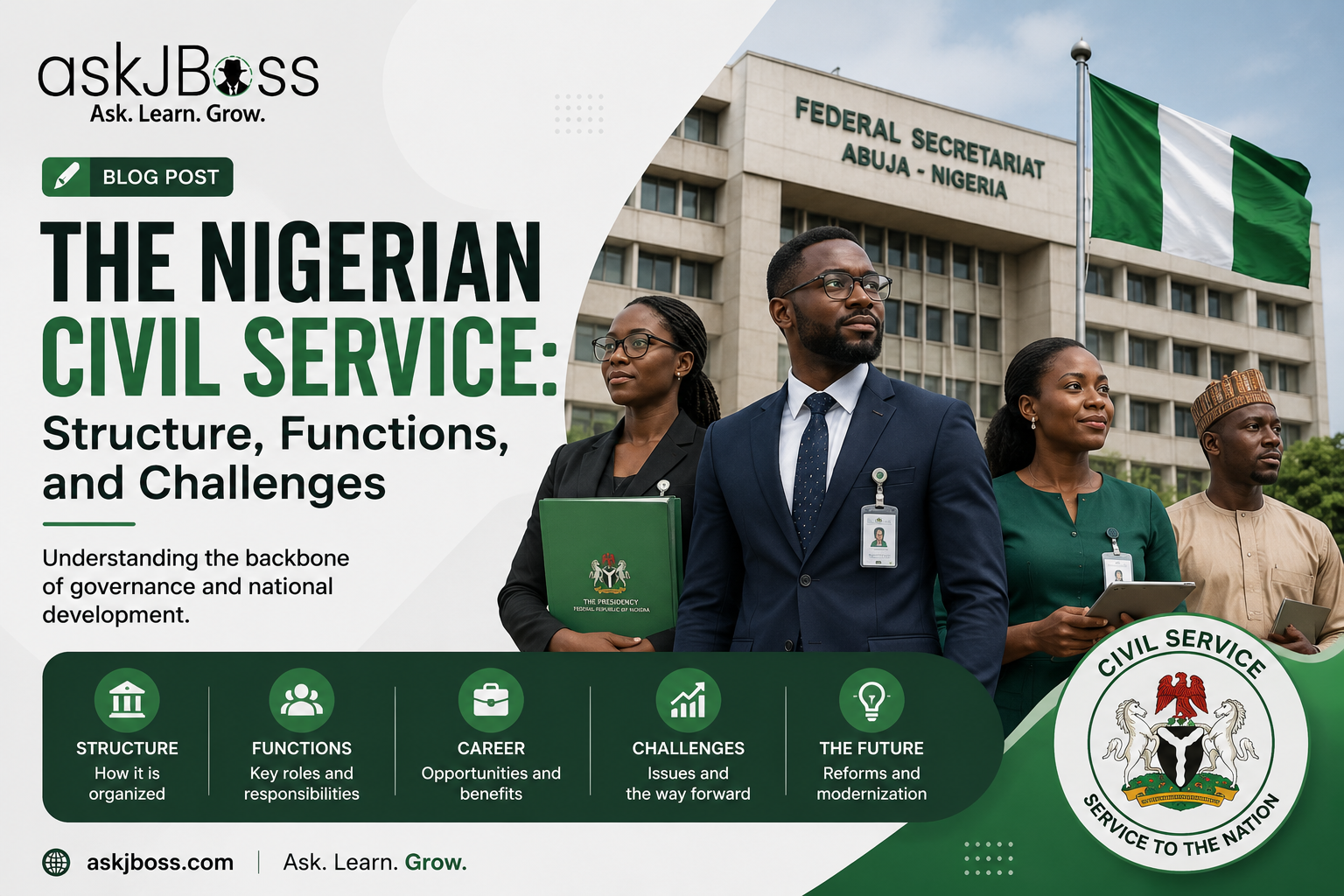
Understanding the Nigerian Civil Service: Structure, Functions, and Challenges
Introduction
The Nigerian Civil Service is one of the most important institutions in the country. It serves as the administrative machinery responsible for implementing government policies, delivering public services, and ensuring continuity in governance regardless of changes in political leadership.
From education and healthcare to finance and infrastructure, civil servants play a crucial role in the day-to-day operations of government at the federal, state, and local levels.
What is the Nigerian Civil Service?
The Nigerian Civil Service consists of government employees who work in various ministries, departments, and agencies (MDAs). These employees are responsible for carrying out government policies and providing essential public services to citizens.
Unlike political office holders, civil servants are career professionals who remain in service regardless of which political party is in power.
Structure of the Nigerian Civil Service
The civil service operates across three levels:
1. Federal Civil Service
The Federal Civil Service is responsible for implementing national policies and programs. It operates through various ministries such as:
-
Ministry of Finance
-
Ministry of Education
-
Ministry of Health
-
Ministry of Agriculture
-
Ministry of Works
-
Ministry of Interior
2. State Civil Service
Each state government maintains its own civil service responsible for implementing state policies and programs.
3. Local Government Service
Local governments employ staff who manage grassroots administration and community development programs.
Functions of the Civil Service
The Nigerian Civil Service performs several key functions:
Policy Implementation
Civil servants execute government policies and ensure programs approved by elected leaders are effectively carried out.
Administrative Support
They provide professional advice, research, planning, and administrative support to government officials.
Public Service Delivery
Civil servants deliver essential services in areas such as:
-
Education
-
Healthcare
-
Agriculture
-
Security administration
-
Infrastructure development
Record Keeping
Government records, statistics, official documents, and administrative procedures are maintained by civil servants.
National Development
Through policy execution and service delivery, the civil service contributes significantly to national development.
Career Opportunities in the Civil Service
The Nigerian Civil Service offers employment opportunities for professionals in various fields, including:
-
Accounting
-
Law
-
Engineering
-
Information Technology
-
Economics
-
Medicine
-
Education
-
Public Administration
-
Agriculture
-
Environmental Sciences
Recruitment is generally conducted through civil service commissions and approved government agencies.
Benefits of Working in the Civil Service
Many Nigerians consider civil service employment attractive because of:
Job Security
Civil service jobs often provide greater employment stability than many private-sector positions.
Pension Benefits
Qualified civil servants are entitled to pension benefits upon retirement.
Career Progression
Employees can advance through promotion examinations, training programs, and years of service.
Professional Development
Government institutions frequently provide workshops, seminars, and training opportunities.
Challenges Facing the Nigerian Civil Service
Despite its importance, the civil service faces several challenges:
Bureaucracy
Complex procedures can sometimes slow decision-making and service delivery.
Funding Constraints
Limited resources may affect the efficiency of government programs.
Technology Adoption
Many government offices continue to modernize their systems to improve productivity and efficiency.
Capacity Building
Continuous training is necessary to equip civil servants with modern administrative and technological skills.
Ongoing Reforms
Over the years, the Nigerian government has introduced reforms aimed at:
-
Improving transparency
-
Enhancing accountability
-
Digitizing government services
-
Strengthening performance management
-
Reducing corruption
-
Improving service delivery
These reforms seek to build a more efficient and citizen-focused public service.
The Future of the Nigerian Civil Service
The future of the Nigerian Civil Service lies in modernization, innovation, and digital transformation. As technology continues to reshape governance worldwide, civil servants will play an increasingly important role in implementing e-government solutions and improving public service delivery.
A professional, efficient, and accountable civil service remains essential for Nigeria's economic growth, social development, and democratic stability.
Conclusion
The Nigerian Civil Service is the backbone of public administration and governance. Through policy implementation, service delivery, and institutional continuity, civil servants contribute significantly to national development.
While challenges remain, ongoing reforms and technological advancements offer opportunities to build a stronger and more effective civil service that better serves the needs of Nigerians.
Author: AskJBoss.com
Category: Government & Public Administration
Tags: Nigerian Civil Service, Public Service, Government Jobs, Federal Government, State Government, Public Administration, Career Development
Kategorien
Mehr lesen
Top TikTok Influencers in Africa TikTok has exploded across Africa, creating a new generation of digital stars who influence trends, shape culture, and earn significant incomes from their content. These influencers combine humor, style, dance, commentary, and creativity to engage millions of followers. 1. Peller (Nigeria) One of the continent’s most watched live streamers, Peller rose to...

The Power of Persistence: How to Succeed in Business Against All Odds Success in business is not reserved for the lucky or the wealthy. It belongs to those who are willing to dream, act, fail, learn, and rise again. Every great entrepreneur you admire today once faced rejection, fear, and uncertainty. What separated them from the rest was not talent alone—it was persistence. 🌱 Every Big...

Here's a professional blog post you can publish on AskJBoss.com. Nigeria's Domiciliary Account Policy Changes: What Nigerians Need to Know in 2026 Nigeria's foreign exchange landscape continues to evolve, and domiciliary accounts remain one of the most important financial tools for individuals, businesses, freelancers, exporters, and Nigerians in the diaspora. Recent updates from the Central...
How to Lose Weight Without Going to the Gym: Foods to Eat and Foods to Avoid Losing weight does not always require expensive gym memberships or intense workout routines. With the right lifestyle choices and healthy eating habits, you can achieve your weight loss goals from the comfort of your home. The key is consistency, smart food choices, and staying active in simple ways. This guide...

Fight Your Fatigue: Causes, Symptoms, and Proven Ways to Restore Your Energy Published by AskJBoss.com Fight Your Fatigue: Reclaim Your Energy and Live Your Best Life Do you wake up feeling tired even after a full night's sleep? Do you struggle to stay focused during work or find yourself constantly reaching for coffee just to make it through the day? If so, you're not alone. Fatigue has become...