

 الشروط
 الخصوصية
Nigeria's ₦1,300 Per Litre Petrol Reality: How Rising Fuel Prices Are Reshaping the Economy
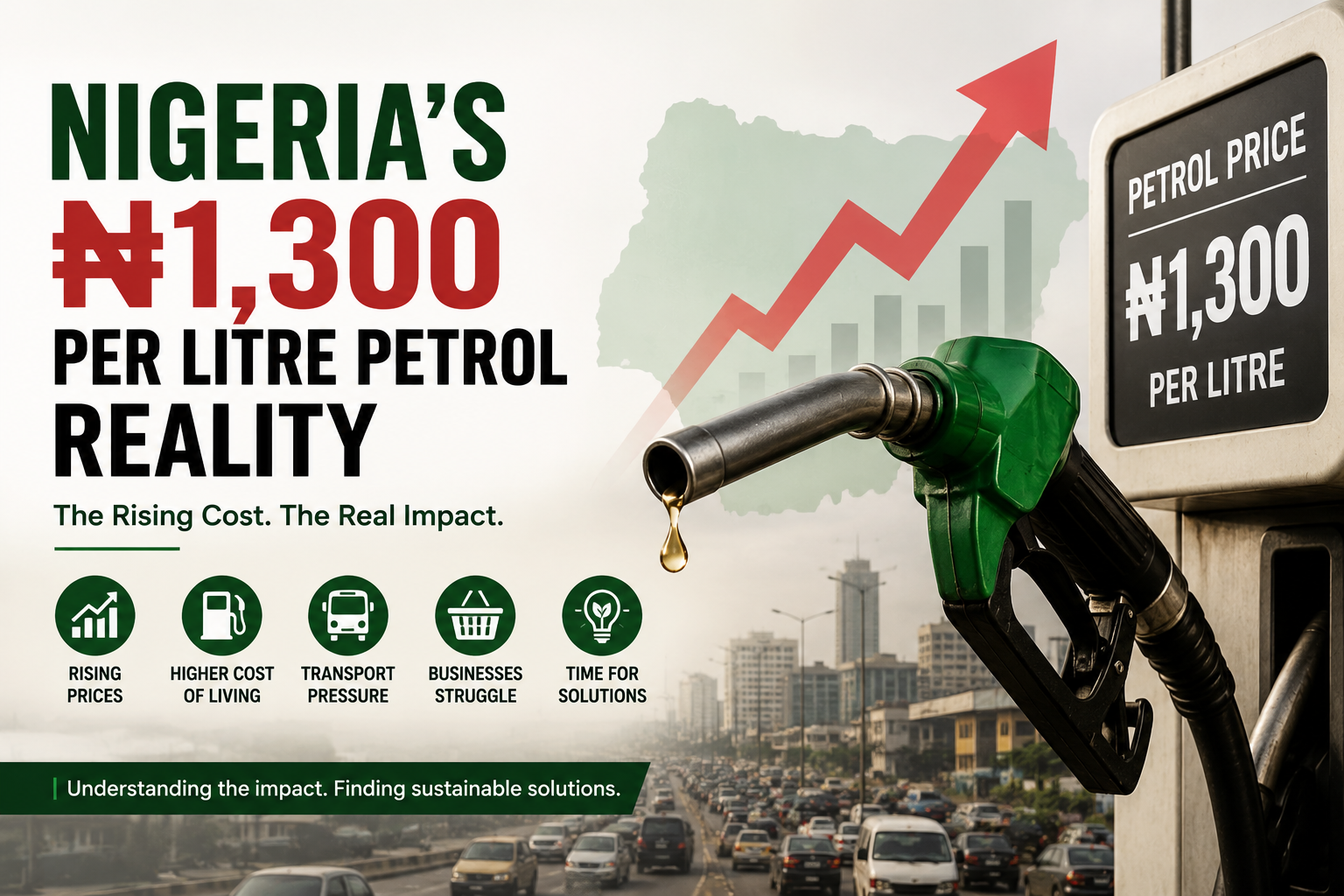
Nigeria's ₦1,300 Per Litre Petrol Reality: How Rising Fuel Prices Are Reshaping the Economy
Introduction
The sharp rise in petrol prices to approximately ₦1,300 per litre has become one of the most significant economic challenges facing Nigerians today. For millions of households, businesses, and commuters, the increase has translated into higher living costs, reduced purchasing power, and growing concerns about economic stability.
As fuel remains central to transportation, power generation, and business operations, the effects of rising petrol prices extend far beyond filling stations.
Why Petrol Prices Have Increased
Several factors have contributed to the increase in fuel prices across Nigeria, including:
-
Removal of fuel subsidies.
-
Exchange rate fluctuations and naira depreciation.
-
Rising global crude oil and refined petroleum costs.
-
Increased transportation and distribution expenses.
-
Dependence on imported refined petroleum products.
These developments have significantly altered the pricing structure of fuel across the country.
Impact on Nigerian Households
For many families, transportation expenses have doubled or even tripled within a short period. Daily commuters now spend a larger portion of their income on getting to work, school, and other essential activities.
The increase in fuel costs has also contributed to higher prices for:
-
Food items
-
Consumer goods
-
School transportation
-
Healthcare services
-
Rent and utility expenses
As businesses pass increased operating costs to consumers, inflationary pressures continue to affect household budgets nationwide.
Businesses Under Pressure
Small and medium-sized enterprises (SMEs) are among the hardest hit by rising petrol prices. Many businesses rely on fuel-powered generators due to inconsistent electricity supply.
The consequences include:
-
Higher production costs.
-
Reduced profit margins.
-
Increased product prices.
-
Staff downsizing in some sectors.
-
Slower business expansion plans.
Many entrepreneurs are now exploring alternative energy sources such as solar power to reduce long-term operating costs.
Transportation Sector Challenges
Commercial transport operators have repeatedly adjusted fares upward in response to higher fuel prices. This has affected:
-
Inter-state travel
-
Urban transportation
-
Logistics and delivery services
-
Agricultural supply chains
The resulting increase in transportation costs impacts nearly every sector of the economy.
Opportunities Amid the Challenge
While the current situation presents significant difficulties, it has also accelerated discussions around:
Alternative Energy
The high cost of petrol is encouraging investment in:
-
Solar energy solutions
-
Electric mobility
-
Compressed Natural Gas (CNG) vehicles
-
Energy-efficient technologies
Local Refining Capacity
The development of local refining infrastructure could help reduce Nigeria's dependence on imported fuel products and improve long-term price stability.
Innovation and Entrepreneurship
Businesses are increasingly adopting digital solutions, remote work models, and cost-saving technologies to remain competitive in a high-cost environment.
The Way Forward
Addressing the impact of rising fuel prices requires coordinated efforts from government, private sector stakeholders, and citizens. Investments in local refining, renewable energy, transportation infrastructure, and economic diversification will be critical to reducing vulnerability to future fuel price shocks.
Conclusion
The reality of petrol selling for around ₦1,300 per litre marks a significant turning point for Nigeria's economy. While the immediate effects are challenging for households and businesses alike, the situation also highlights the urgent need for sustainable energy solutions, economic reforms, and innovative approaches that can help build a more resilient future.
As Nigerians adapt to this new reality, the decisions made today will shape the country's economic landscape for years to come.
Suggested SEO Title: Nigeria's ₦1,300 Per Litre Petrol Crisis: Economic Impact on Households and Businesses
Suggested Meta Description: Explore how Nigeria's petrol price increase to ₦1,300 per litre is affecting households, businesses, transportation, inflation, and the wider economy.
الأقسام
إقرأ المزيد
Visa Guide for European Countries to Relocate With Your Family in 2026 Relocating to Europe with your family requires the right visa and legal residence permit. Most European countries offer visas through work, study, business, or family reunification programs. Below is a country-by-country visa guide for some of the best European destinations for families in 2026. 🇩🇪 Germany Main Visa...

SportyBet Nigeria: A Leading Name in Nigeria's Sports Entertainment Industry Discover how SportyBet Nigeria became a recognized name in Nigeria's sports entertainment industry and how technology is transforming the fan experience. Nigeria is home to one of Africa's most passionate sports fan bases, and over the years, digital sports entertainment platforms have grown significantly...

Best Trading Apps in 2026: Reviews, Features & How to Choose the Right One In 2026, online trading is more popular than ever — and choosing the right trading app can make all the difference between profit and frustration. Whether you’re a beginner or an experienced trader, the best trading apps should be secure, easy to use, and packed with tools that help you trade...

How to Make Money Online in 2026: Real Opportunities That Work The internet has changed the way people earn a living. Today, you don’t need a physical office or large capital to start making money online. With the right skills, tools, and mindset, anyone can build a reliable income stream from the comfort of their home. This guide explains practical and proven ways to make money...

How to Make Nigerian Groundnut Soup (Peanut Soup): A Delicious Step-by-Step Recipe Nigerian Groundnut Soup, also known as Peanut Soup, is one of the country's most loved traditional dishes. Rich, creamy, and packed with flavor, this soup is prepared using ground roasted peanuts (groundnuts), meat or fish, vegetables, and local spices. It is enjoyed across different regions of Nigeria and pairs...