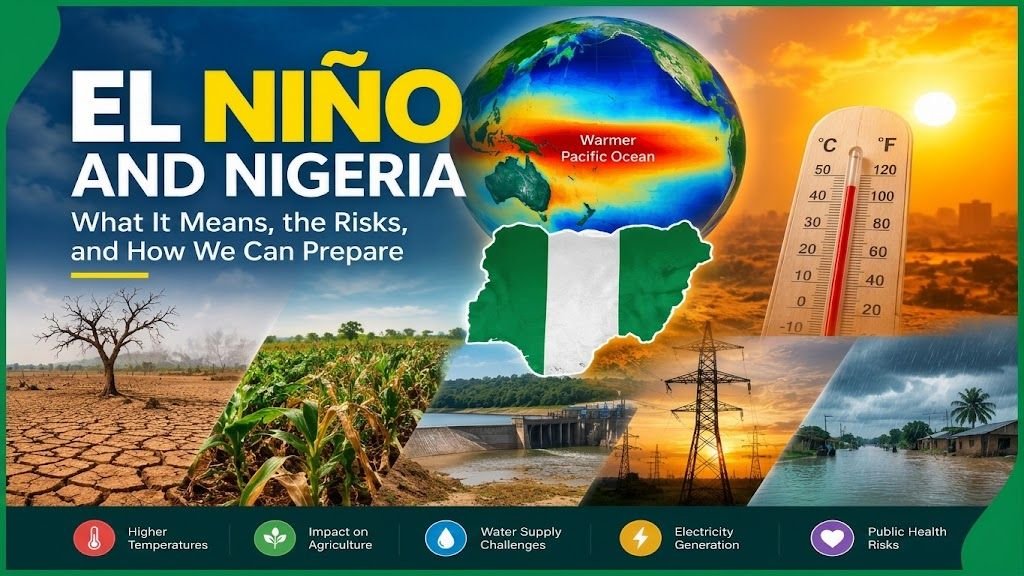
Key Takeaways
- Nigeria could face extreme heat and changing rainfall as El Niño strengthens, with NiMet confirming a strong event in its August 2026 update.
- University of Chicago’s Climate Impact Lab projects 31,400 additional heat-related deaths in Nigeria between September 2026 and February 2027 if forecast conditions materialise.
- WHO guidance recommends drinking water regularly, limiting direct sun exposure and checking on vulnerable people to reduce health risks during extreme heat.
Nigeria could face serious health risks from extreme heat in the coming months as a strengthening El Niño climate pattern raises concerns about rising temperatures and changing rainfall across the country, Naija News reports.
Researchers at the University of Chicago’s Climate Impact Lab have projected that Nigeria could record an additional 31,400 heat-related deaths between September 2026 and February 2027 if the forecast conditions materialise.
The estimate, published in September, places Nigeria among the countries expected to suffer the highest number of additional heat-related deaths during the period.
However, the figure is a scientific projection, not a confirmed death toll or a certainty that the deaths will occur
The warning comes as the World Meteorological Organisation (WMO) reported on September 3 that El Niño had become firmly established and was expected to strengthen into a very strong event, with effects on global weather patterns likely to continue into early 2027.
Nigeria’s weather agency, the Nigerian Meteorological Agency (NiMet), also confirmed the onset of a strong El Niño event in its August 2026 climate update, warning of possible changes to weather conditions.
What Exactly Is El Nino?
El Niño is a natural climate pattern that occurs when the surface water of the central and eastern tropical Pacific Ocean becomes warmer than normal, Naija News understands.
Although the warming takes place thousands of kilometres away from Nigeria, it can affect how air moves around the world, leading to changes in temperature and rainfall in different regions.
El Niño is part of a wider climate pattern known as the El Niño-Southern Oscillation (ENSO). Its opposite phase is La Niña, which involves cooler-than-normal sea surface temperatures in the same part of the Pacific Ocean.
According to the WMO, El Niño usually occurs every two to seven years and lasts about nine to 12 months. Its effects vary from one region to another and can be influenced by other climate conditions.
This means that a strong El Niño does not automatically guarantee drought, flooding or extreme heat in every part of Nigeria. However, it increases the risk of unusual weather conditions, making early preparation important.
Why Nigeria Should Be Concerned
The warning is particularly important for Nigeria because extreme heat can threaten human health, farming, water supply and other essential services.
The Climate Impact Lab estimates that extreme heat could cause 451,000 additional deaths worldwide between June 2026 and February 2027 compared with a normal year. Nigeria accounts for a projected 31,400 of those deaths between September 2026 and February 2027.
The estimate should not be interpreted as a prediction that a specific number of Nigerians will certainly die. Rather, it highlights the possible scale of the danger if temperatures rise and effective measures are not taken to protect vulnerable people.
1. Extreme Heat Could Put Lives At Risk
One of the biggest concerns is the effect of high temperatures on human health.
Prolonged exposure to heat can cause dehydration, heat exhaustion and heatstroke, a potentially fatal condition that requires urgent medical attention.
The World Health Organisation (WHO) warns that older people, infants, outdoor workers and people with existing health conditions are particularly vulnerable to extreme heat.
People who work on farms, at construction sites, in markets and along roads may face greater risks when they spend long hours under direct sunlight.
Nigerians are therefore advised to drink water regularly, wear light and loose-fitting clothing, stay in shaded or cool places and avoid strenuous activities during the hottest part of the day where possible.
Residents should also check on older relatives, children, neighbours and others who may struggle to cope with extreme temperatures.
Anyone who develops severe symptoms, including confusion, convulsions or loss of consciousness during extreme heat, needs immediate medical attention.
2. Farmers Could Face Changing Rainfall Patterns
Agriculture is another sector that could be affected by changes in rainfall.
If the rainy season ends earlier than expected or dry spells become longer, farmers could struggle to provide enough water for their crops. This could affect planting schedules, crop growth and harvests.
On the other hand, excessive rainfall in some locations could cause flooding, wash away crops and damage farmland.
NiMet’s August 2026 seasonal update highlighted the possibility of varying rainfall conditions across Nigeria. Its outlook for August to October 2026 projected normal to above-normal rainfall across much of the North, while parts of the South-West and Cross River State were expected to experience normal to below-normal rainfall.
These forecasts show why farmers should not assume that all parts of the country will experience the same weather conditions.